


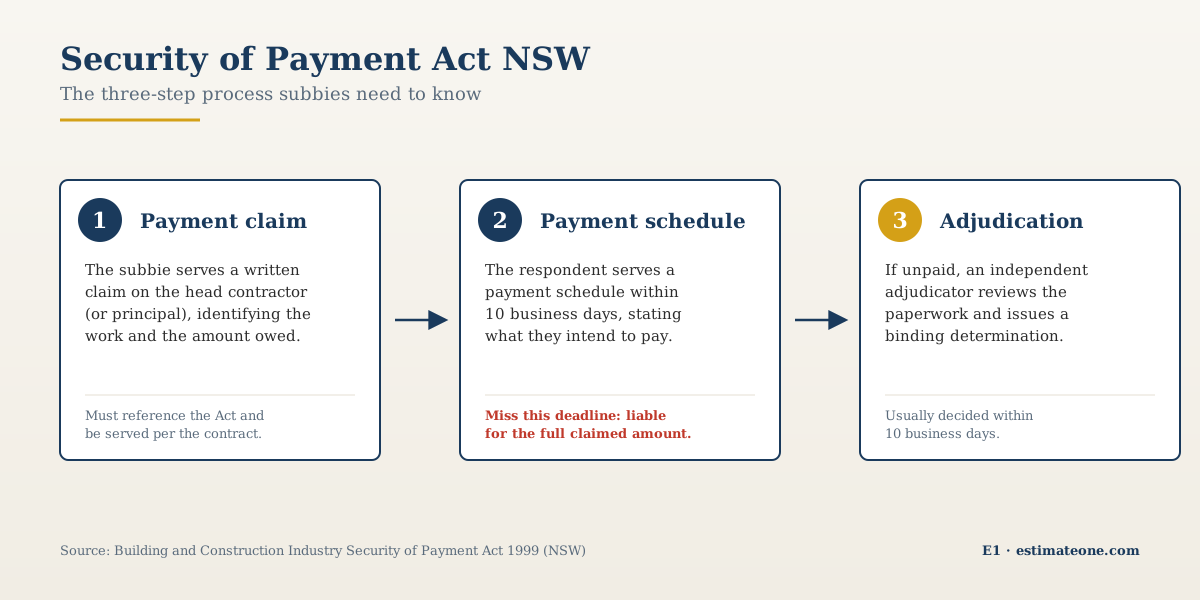
The Security of Payment Act NSW (SoPA) allows subcontractors to receive progress payments for work performed, protecting industry cash flow by mandating strict payment windows. It also offers a fast adjudication process for disputes, simplifying claims and protecting subbies if payment isn’t made.
Why do I need to know about the Security of Payment Act NSW?
You’re not a lawyer. In fact, you likely chose your current profession to get as far away from the tasks a lawyer performs as possible. That said, knowing what to include in a payment claim, which deadlines apply, and what will get a claim thrown out is important if you want to get paid.
This practical guide explains the key parts of the Security of Payment Act NSW you need to know, and we’ll even include a copy-and-paste claim template at the bottom to save you some time. You don’t need to be a lawyer to use this act and get paid.
How does the Security of Payment Act NSW work?
SoPA overrides traditional contract law and establishes a simple, statutory entitlement to progress payments.
The easy three-step claims process looks like this:
- You serve a payment claim
- The respondent serves a payment schedule in 10 business days and is automatically liable for the full claimed amount if they don’t respond within this time
- If they don’t pay, an independent adjudicator reviews the paperwork and issues a binding determination (usually within another 10 business days)
It almost seems too easy, but there are some more nuanced things to be aware of when searching for tenders in NSW and reviewing contracts to ensure everything works as smoothly as the above three steps.
Being aware of the 2019 reforms
Before we dive into specifics and tips, we want to make sure you are aware of the 2019 amendments to the SoPA that changed two things that matter enormously for subbies.
Before 2019, payment claims had to be served on or after a specific reference date defined by the contract. Missing this date meant your claim was void, and it was really just another layer of stress no one needs. Thankfully, this is now gone. Subbies are now entitled to serve one payment claim per month for work carried out to that date, regardless of what the contract says.
Also, under current regulations, payment claims for most construction contracts must state that they’re made under the Building and Construction Industry Security of Payment Act 1999 (NSW). Some online articles will tell you no endorsement is needed, but that is outdated information. The templates at the bottom of this article have the correct wording.
What are the SoPA payment timeframes?
The SoPA timeframes are hard payment windows that override any contract terms attempting to extend them. They look like this:
- Principal to head contractor: 15 business days after the claim
- Head contractor to subbie: 20 business days after the claim
- Subbie to residential subbie: 10 business days after the claim
- Respondent’s payment schedule: 10 business days after receiving a claim
A “business day” in NSW construction law excludes weekends, public holidays, and the period from December 27 to 31. Contracts can set shorter payment periods, but extensions are void and unenforceable.
What makes a valid payment claim?
A valid claim essentially needs to satisfy Section 13 of the Act, which states a claim must be in writing, identify the work/goods/services provided in clear detail and state the exact dollar amount, including GST. The claim must also reference the Act (as mentioned above, which is as simple as including this text:
This is a payment claim made under the Building and Construction Industry Security of Payment Act 1999 (NSW).
Important tip: When identifying the work, a statement that is too vague, like “Work completed in March”, won’t cut it. You need to reference specific site instructions or contract line items with evidence where possible (site diaries, delivery dockets, signed day works, etc).
What should a payment schedule look like?
A payment schedule, which must be received within 10 days of the receipt of the claim, must state the scheduled amount the builder intends to pay. If that’s less than the full claim, it must provide detailed reasons for withholding. No grounds for withholding can be offered if they weren’t in the original payment schedule. If something isn’t in the schedule, it essentially won’t exist if that matter requires adjudication.
What can I do if I don’t get paid?
If a payment claim is ignored and the due date passes, you must serve a notice of intention to apply for adjudication under Section 17(2). You’ll have to do this within 20 days of the payment due date, and it gives the respondent a final five business days to provide a payment schedule.
If there are still crickets on their end, they’re barred from lodging an adjudication response. Just be aware that if you miss the 20-business-day window for serving that notice, you lose access to adjudication.
What happens during the adjudication process?
The adjudication process is completely paper-based and involves an independent adjudicator reviewing the claim, payment schedule, and supporting information. They will then issue a binding determination within 10 business days.
Fees vary based on claim size but are often capped to keep the process accessible. If you win 100% of your claim, the respondent pays 100% of the adjudication fees.
It is important, however, to be aware that even if the builder is clearly in the wrong, claims can fail. This is often due to technicalities; for example, if you serve the claim to a project manager’s personal email rather than the address specified in the contract, the claim may be considered invalidly served. It sounds a little bit wild, but it’s the rules.
Here are three useful points to keep in mind:
- You can only lodge one claim per month, but you can roll unpaid amounts from a previous claim into the next month’s claim
- If you’re performing residential building work over $20,000 without the required Home Building Compensation Fund insurance, you lose entitlement to progress payments
- When submitting a payment claim to a principal, a head contractor must provide a supporting statement declaring that all subcontractors on the project have been paid. (false statements carry penalties of up to $22,000 and three months imprisonment)
Why the contract is your key to getting paid
SoPA is not a cure-all for a bad contract. We strongly recommend that you review tender documents carefully before signing to identify and negotiate out clauses that complicate future SoPA claims.
Here are three common contract risks to look out for:
- Early reference dates that force claims before work is fully costed
- Complex notice clauses (make sure you have a stringent site reporting system)
- Unclear scope definitions
Always read your contracts before signing (as tedious as it may be) to make sure you are fully protected. This time spent here will be well worth it if it ensures you are paid for your work down the line. Want to find live tenders in NSW? Create a free account with E1 (EstimateOne) today.

Alexander
Green
General Manager - Subcontractors


